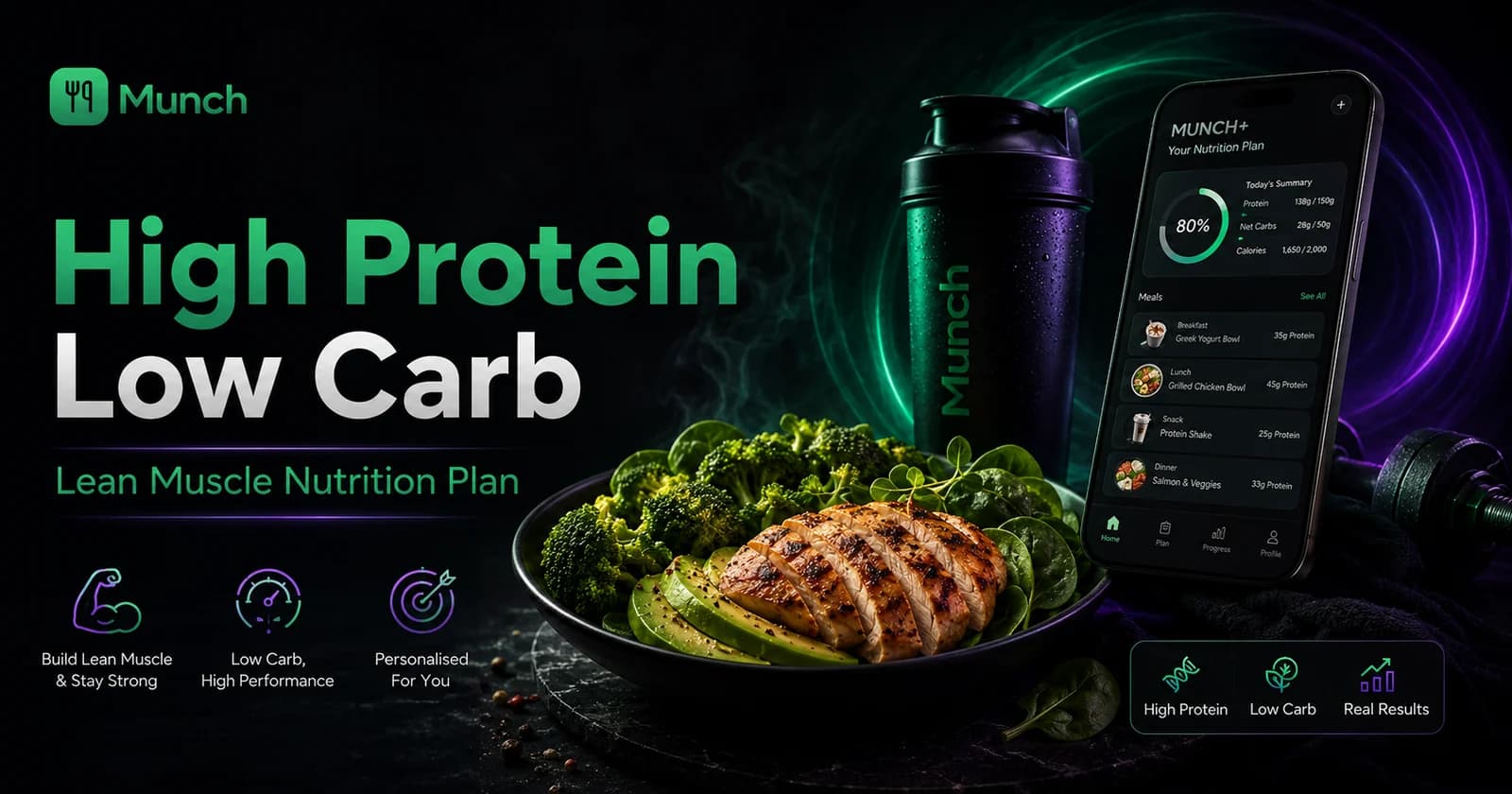
A high protein low carb plan app should help users build repeatable meals, choose appropriate protein sources, control rather than automatically eliminate carbohydrates and connect the food plan to training. MUNCH+ uses the Performance Center assessment to generate the plan and keep it available alongside workouts and progress.
This system may suit users seeking a protein-first structure for fat-loss or lean-mass goals, but suitability depends on total intake, food quality, training, recovery and individual health. People with kidney disease, diabetes treatment, pregnancy, an eating disorder history or another medical concern should obtain appropriate professional advice before making major dietary changes.
Key takeaways
- High protein low carb is a meal structure, not permission to eat unlimited protein or remove every carbohydrate.
- Protein should be distributed across practical meals rather than concentrated in one oversized evening meal.
- Vegetables, fibre-rich foods and hydration remain important when carbohydrate portions are controlled.
- Training demand matters: users doing harder or longer sessions may need a different carbohydrate approach.
- Track adherence, hunger, performance and recovery before deciding whether the system fits.
Who this is for
This system is for users who want a clear protein-first routine and controlled carbohydrate portions. It is not automatically better than the High Carb High Protein system for every training goal.
- Users who prefer protein-centred meals and want a simpler body-composition routine.
- People whose training demand can be supported with controlled rather than high carbohydrate intake.
- Users willing to plan vegetables, fibre and meal preparation instead of relying only on shakes or meat.
- People prepared to review energy, hunger and performance rather than chasing the lowest possible carb number.
- Anyone advised by a clinician to follow a different dietary pattern.
- Users expecting zero carbohydrate, ketosis or a medical ketogenic protocol from this general system.
- People whose demanding training repeatedly suffers with the selected carbohydrate level.
- Anyone using restriction in a way that worsens an eating-related concern.
Download MUNCH and open the Performance Center
The app is free to download. MUNCH+ unlocks the Performance Center for £1.99 per month; specialist consultations remain separate.
What “high protein low carb” means in a practical meal plan
The useful interpretation is protein-first with controlled carbohydrate choices—not an extreme label.
High protein means that each main meal has a meaningful protein source and the full day is organised to support the user’s goal. Low carb means carbohydrate portions are controlled relative to the plan, not that fruit, vegetables, grains or every source of carbohydrate must disappear. The generated MUNCH+ plan determines the actual structure; this article does not prescribe a universal gram target.
The quality of the food pattern matters. A plan built entirely from processed protein products and very few vegetables may satisfy a label while failing to create a balanced, practical routine. Protein sources, vegetables, suitable fats and selected carbohydrate foods should work together so meals remain filling, varied and realistic.
- Protein-first: a clear source in each main meal.
- Controlled carbohydrates: selected portions based on the plan and training context.
- Vegetable and fibre focus: avoid turning “low carb” into a low-variety routine.
- Planned snacks: use them to solve hunger or training needs, not as automatic additions.
- Realistic preparation: meals must fit budget, cooking facilities and schedule.
How to structure a high protein low carb day
Build from meal roles and portions instead of collecting isolated “high-protein” products.
- 1
Choose the protein source
Select a suitable protein for each main meal, considering dietary preference, preparation time, budget and current product label.
- 2
Add vegetables and fibre-rich foods
Use a range of suitable vegetables and other fibre sources so the plan is not reduced to protein plus supplements.
- 3
Place carbohydrate portions deliberately
Use the generated plan to decide where rice, oats, bread, potatoes, fruit or other carbohydrate foods fit, especially around training.
- 4
Add suitable fats and flavour
Use portions that support the meal without assuming every low-carb food can be consumed without limit.
- 5
Plan snacks only when needed
A snack should solve a real gap in hunger, convenience or training—not exist because a product is marketed as high protein.
Low carb is relative
The plan name describes the system direction. It does not establish one universal carbohydrate ceiling, and it should not be confused with a medical ketogenic diet.
Example high protein low carb meal framework
Use the table to understand meal construction, not as a fixed prescription.
A practical framework gives each meal a protein base, adds vegetables or another suitable fibre source and places a controlled carbohydrate portion where it best supports the user’s plan. Exact foods and amounts depend on the generated plan, appetite, dietary requirements and any professional advice.
Variety can come from changing the protein, cooking method, vegetables, seasoning and the selected carbohydrate rather than rebuilding the entire shopping list every day. This makes adherence easier and supports meal preparation without forcing identical meals.
| Meal role | Protein-first base | Supporting foods | Decision to make |
|---|---|---|---|
| Breakfast | Eggs, yoghurt, cottage cheese or another suitable option | Fruit, vegetables, oats or other planned accompaniment | Choose a format that fits the morning routine |
| Lunch | Chicken, fish, eggs, dairy, tofu, beans or another suitable protein | Salad, cooked vegetables and a controlled carbohydrate portion if planned | Build enough food to prevent an avoidable afternoon crash |
| Dinner | A main protein prepared with a repeatable cooking method | Several vegetables, suitable fats and the planned carbohydrate serving | Match the meal to training and remaining daily structure |
| Snack if needed | A suitable protein-containing option | Fruit, vegetables or another planned side | Use only when it solves a real gap |
Pair the plan with resistance training and recovery
The nutrition system should support the workout system rather than compete with it.
Resistance training gives a high-protein plan a clear performance context. The user needs enough energy to complete sessions with good technique and recover between them. If carbohydrate control repeatedly leads to low training quality, poor recovery or difficulty completing the plan, the current diet direction may need review.
Training type matters. A modest gym routine, bodyweight programme and high-volume hybrid plan do not create identical fuel demands. The High Protein Low Carb system may pair well with several goals, but the selected carbohydrate portions should remain responsive to actual performance and the generated plan.
What to track in a high protein meal planner app
Use several signals so one scale reading does not control the plan.
Track whether meals are completed, whether the food is practical to prepare and whether hunger remains manageable. Repeatedly missing planned meals can mean the recipe, timing, cost or portion structure does not fit. Fixing adherence often matters more than adding stricter rules.
Track workout performance and recovery. Strength trends, session quality, fatigue and sleep provide context for the carbohydrate decision. A plan that appears effective on the scale but consistently damages training quality may not be suitable for the user’s actual goal.
- Protein-containing meals completed as planned.
- Hunger and appetite across the day.
- Vegetable, fibre and food-variety consistency.
- Training performance and recovery quality.
- Preparation time, cost and repeatability.
High Protein Low Carb versus High Carb High Protein
Both systems prioritise protein; the main planning difference is the role and amount of carbohydrate support.
| Decision factor | High Protein Low Carb | High Carb High Protein |
|---|---|---|
| Primary direction | Protein-first meals with controlled carbohydrate choices | Protein plus greater carbohydrate availability |
| Typical goal alignment | Fat-loss or lean-mass structure where lower carbs remain practical | Mass gain, demanding training or higher-volume performance support |
| Training check | Energy and recovery must remain adequate | Total intake and food quality still need control |
| Common mistake | Treating low carb as zero carb or unlimited protein | Treating high carb as unlimited calories |
| Switch signal | Repeated poor training energy or unsuitable restriction | Unmanageable intake, poor adherence or mismatch with the goal |
Common mistakes to avoid
Treating low carb as zero carb without considering training, fibre, fruit or the generated plan.
Assuming more protein always produces more muscle regardless of training, total intake and recovery.
Building the entire day from shakes, bars and processed “high-protein” products.
Ignoring vegetables, fibre and hydration because the protein target receives all the attention.
Reacting to one scale change instead of reviewing adherence and a longer progress trend.
Action checklist
- 1Complete the Performance Center assessment honestly.
- 2Review whether lower carbohydrate intake suits the goal and training demand.
- 3Choose a practical protein source for each main meal.
- 4Add suitable vegetables, fibre and planned carbohydrate portions.
- 5Track meal completion, hunger, performance and recovery.
- 6Review the plan before making it more restrictive.
Frequently asked questions
What does a high protein low carb plan app do?
It organises meals around protein-first choices, controlled carbohydrate portions and progress review. In MUNCH+, the Performance Center assessment helps generate the plan and connects it with workouts. The app does not establish one universal protein or carbohydrate target for everyone and should not replace clinical nutrition advice.
Is high protein low carb the same as keto?
No. “Low carb” is relative to the selected system and does not automatically mean a ketogenic diet or zero carbohydrate. MUNCH+ uses a high-protein, controlled-carbohydrate direction. A medical ketogenic diet has different purposes and should not be assumed from this plan name.
Can a high protein low carb meal plan help with fat loss?
It may support a structured fat-loss routine when the overall plan, adherence, training and total intake are appropriate. The label alone does not guarantee fat loss. Track the full pattern, avoid unlimited portions and seek qualified advice when medical conditions or eating-related concerns affect the decision.
Can I build muscle on a high protein low carb plan?
Muscle gain depends on effective resistance training, adequate overall nutrition, recovery and consistency—not protein alone. Some users may perform well with controlled carbohydrates, while others need greater carbohydrate support for demanding training. Review strength, session quality and recovery before deciding that the system fits.
Sources and further reading
These sources support the general nutrition, activity or safety context. MUNCH feature details come from the current app implementation.
Related MUNCH guides
Use the pillar for the broad topic, then open the focused guide that matches your next decision.
Download MUNCH and open the Performance Center
The app is free to download. MUNCH+ unlocks the Performance Center for £1.99 per month; specialist consultations remain separate.
About this guide
Written by the MUNCH Editorial Team using the current mobile app implementation, the supplied Search Console query data and the MUNCH SEO content framework. The page is reviewed whenever the feature, pricing or availability changes.